A long viewing panel is meant to let the eye travel into the aquarium. When lines and cloudy marks catch the light, the surface itself becomes the first thing you notice. The view beyond has to compete with the marks in front of it.
Two supplied photographs illustrate that visual problem. One is filled with overlapping pale lines; the other offers a much less interrupted view along a display front. Looking closely at both helps explain what matters when considering the appearance of an aquarium panel.
When the surface takes over the picture
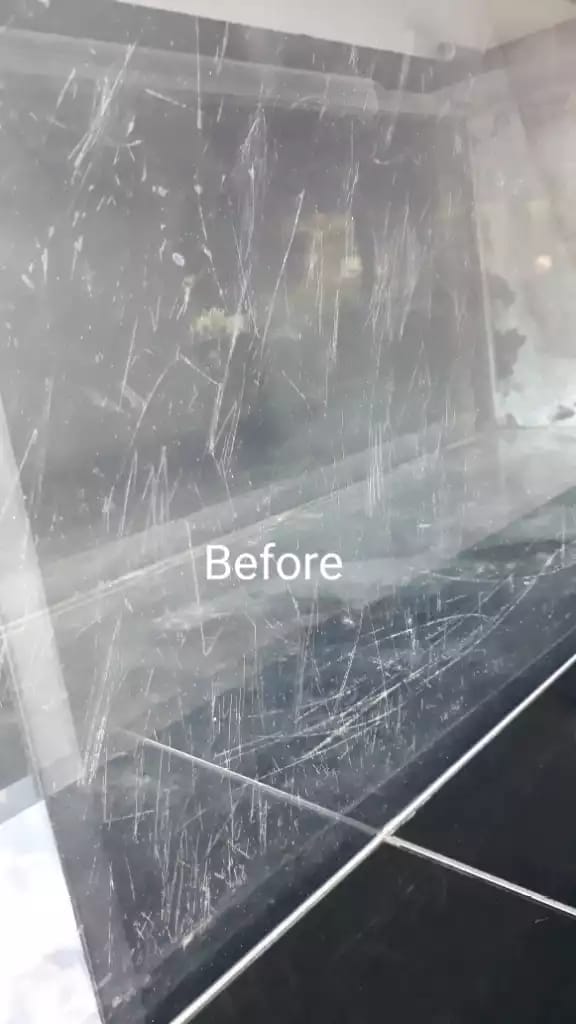
Overlapping lines are especially visible against the darker lower background.
In this view, the marks cover a broad area. Long lines run down the panel, shorter ones cross them and a denser group appears near the bottom. The lighter surroundings and reflections make the marks stand out differently across the photograph.
That is the difficulty with describing the problem as “a scratch.” One isolated line and a whole viewing area covered in marks create different visual impressions. A close-up can reveal the shape of an individual mark, while a wider view shows how much of the display is affected.
The lower part of this photograph is particularly useful. Dark areas behind the panel make many of the pale lines easy to see. Farther up, reflections compete with them. A viewing panel therefore deserves a look from more than one position and under the lighting used around the aquarium.
Looking through the length of a panel
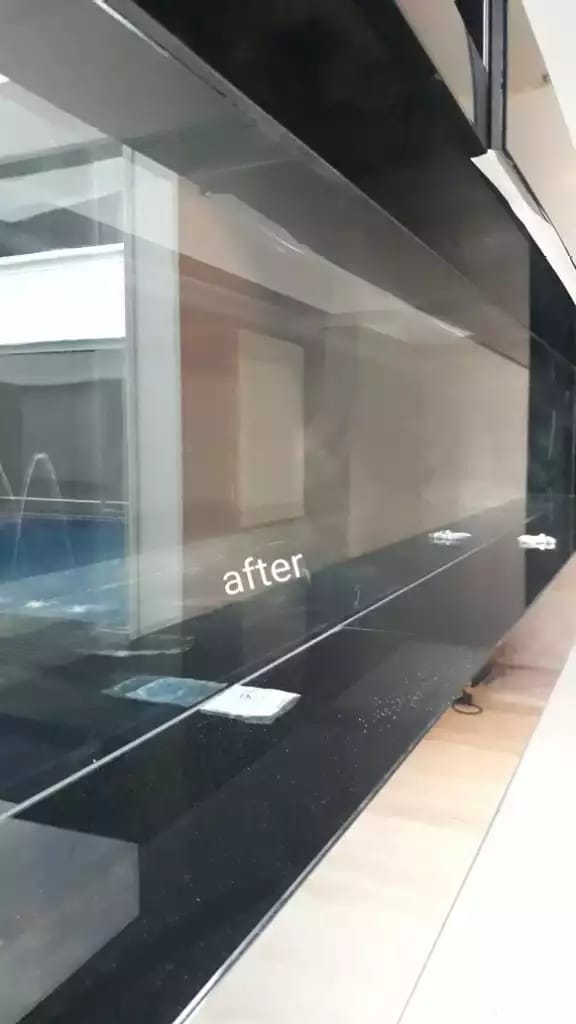
A view along the display front, with the surrounding room visible through and reflected in the panel.
In the second photograph, the long horizontal edges, dark base and surrounding room carry more of the picture. The transparent front is less visually intrusive in this view. The eye follows the length of the installation instead of stopping at dense groups of pale lines.
This is a useful way to think about the desired appearance of an aquarium: what do people see from the positions where they normally stand or sit? A close-up of one area answers only part of that question.
The photographs retain the original “Before” and “after” labels supplied with the files. Their viewpoints and lighting differ, and no matching job record accompanies them. They are visual references for this discussion, rather than a measured comparison of treatment results.
Clarity across the whole viewing area
A surface-treatment proposal should address the complete area that needs attention and the expected appearance through it. Removing the most noticeable line would be only part of the aim if the surrounding panel remained distracting.
The view through a worked area matters too. Our glass scratch removal guide explains how abrasive treatment and polishing can affect the surrounding surface, and why the finish needs to blend into the rest of the glass.
For a long display front, that discussion should include the normal viewing positions, remaining marks and any visible difference across the panel. These are more useful points of comparison than a claim that a photograph proves every scratch has disappeared.
Identify the panel before choosing a method
Aquariums can be made from glass or acrylic. Aqueon's material guidance explains that their characteristics, including susceptibility to scratching, differ. The tank's specifications should establish the material before a treatment is selected. Aqueon aquarium-material FAQ.
Routine care needs the same attention. Aqueon's cleaning magnets use separate pads for glass and acrylic, and their design helps keep the cleaning surface above gravel to reduce scratching risk. The practical point is to use the correct aquarium tool and keep grit out of its contact surface. Aqueon cleaning-magnet information.
The appearance of the front also needs to be kept distinct from the condition of the aquarium as a whole. These views do not establish the condition of seams or joints. A surface-mark enquiry and a concern about leaking describe different work to investigate.
Discuss your aquarium panel with us
If surface marks are interrupting your view, send us a full-panel view and a close-up on WhatsApp. Mention the material if known and whether the tank is empty or in use. That gives the conversation a clear starting point: the panel you have and the appearance you want to improve.