A cloudy shower screen can make a freshly cleaned bathroom look unfinished. You wipe it, rinse it and wait for it to dry, only to see the same pale marks again. Before buying a stronger cleaner or replacing the screen, it helps to separate three different problems: residue on the glass, scratches in the surface and deterioration of the surface itself.
These can look similar from the bathroom doorway. They do not respond to the same treatment.
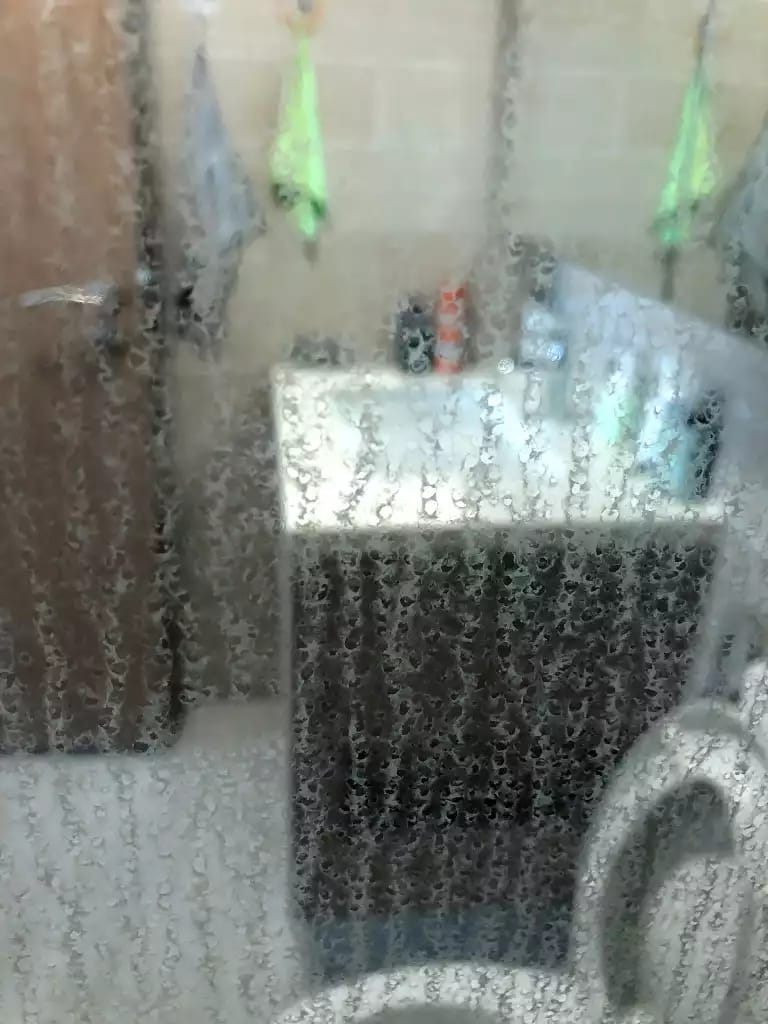
Spotting and vertical trails across shower glass obscure the bathroom fittings beyond.
Three reasons shower glass can look cloudy
Deposits and residue on the surface
Water spots and deposits from washing products can leave an uneven film across a screen. This is a cleaning problem when the unwanted material can be removed without changing the glass underneath. Manufacturer Sterling's care guidance addresses both water spotting and soap deposits, including drying the door after use. Sterling shower-door care.
The photographed panel is a useful example of the appearance people describe as “stained”: there are many small marks rather than one clearly defined line. It would be premature to call all of them permanent damage—or promise they will all wash off.
Scratches left in the glass
Scratches are a different surface condition. Look at whether the complaint is a general film or fine lines that become obvious when light crosses them. Cleaning may remove residue around those lines without resolving them. Our glass scratch removal guide explains the polishing options and why the final clarity matters.
Surface deterioration
Shower glass can also develop a persistent cloudy appearance through surface deterioration. Pilkington explains that prolonged interaction between water and ordinary glass can contribute to staining and corrosion; its OptiShower range uses a purpose-made coating to limit those interactions. That explains why every persistent mark should not be treated as removable dirt. Pilkington's explanation of shower-glass surface corrosion.
The distinction matters in practice. Removing a deposit and restoring a changed surface are different jobs, even if both are described casually as “stain removal.”
Why a stronger cleaner is not automatically the answer
Once the obvious film has gone, the remaining appearance needs another look. Continuing to scrub the whole enclosure gives little information about which part of the problem has improved.
A controlled comparison is more informative: assess a small area using a method compatible with that particular glass, then compare the dry area with its surroundings. Vitro recommends testing cleaning methods on a limited area and checking for adverse effects before proceeding more widely. Vitro's glass-cleaning guidance.
Coatings also change the choice of cleaner and tool. For example, Guardian's ShowerGuard instructions exclude harsh abrasive tools and certain acids. A product suitable for one screen may not be suitable for another. Guardian ShowerGuard care guidance.
Does Singapore's water explain the marks?
PUB describes Singapore's tap water as moderately soft. It would be inaccurate to explain every local shower stain by saying that Singapore has very hard water. PUB water-treatment information.
For your screen, the more useful questions concern the visible residue, cleaning products already used and any known surface treatment. The country's water description cannot tell you whether a particular mark is soap residue, a scratch or deterioration of the glass.
A care routine that respects the whole enclosure
Start with the screen manufacturer's instructions, including any instructions for a coating. Sterling recommends a squeegee after showering, occasional cleaning with mild detergent diluted in water, and avoiding abrasive pads or sharp tools. It also treats the metalwork separately because some products can damage its finish. Sterling's glass and metal care instructions.
That last point is easy to miss when concentrating on a cloudy panel. Cleaner reaches handles, hinges, seals and the bottom edge as well as the glass. A sensible care routine accounts for the enclosure around the mark.
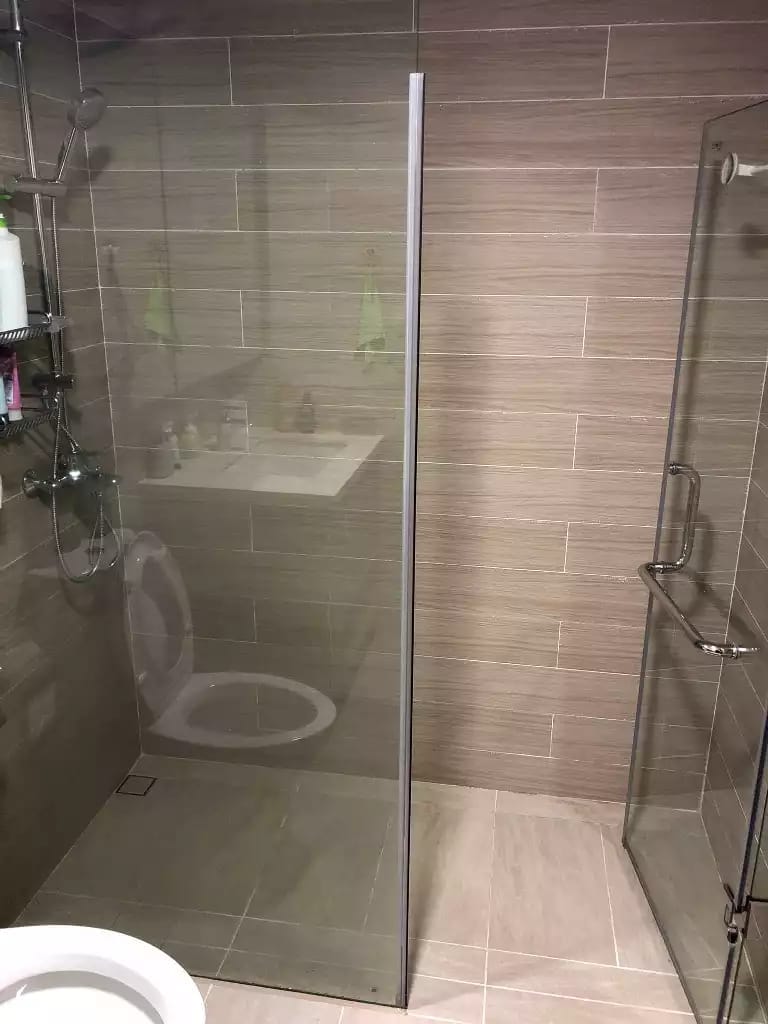
Glass panels, a hinged door and metal fittings within a shower enclosure.
When is restoration worth considering?
Restoration becomes a relevant discussion when compatible cleaning leaves a persistent surface problem. The question is whether treatment can improve that particular glass to an acceptable finish. Coating compatibility and any scratches need to be considered together.
Replacement deserves separate consideration if the glass is damaged in a way that surface work will not address, or if the achievable appearance would still be unsatisfactory. A leaking or poorly moving shower door also needs its own diagnosis: improving the panel's clarity does not explain why water escapes or a door catches.
For example, a fixed screen with cloudy marks presents one problem. A marked door that also catches on the enclosure presents two. Keeping both in view prevents an attractive surface result from being mistaken for a complete repair.
Common questions about shower-glass stains
Will an easy-clean coating mean no more cleaning?
It still needs the care specified for the product. Kohler also notes that its CleanCoat treatment does not prevent fogging during shower use. A coating's cleaning benefits should not be confused with preventing all condensation. Kohler CleanCoat guidance.
Can I use vinegar on any shower screen?
Check the exact glass, coating and surrounding hardware instructions. There is no single cleaner recommendation that covers every enclosure. Avoid treating an unidentified screen with an internet recipe simply because another person's glass responded to it.
Does cloudy glass always need replacing?
No. Removable residue, treatable surface damage and replacement work are different possibilities. The aim is to identify which condition is actually present before paying for a solution.
Help with cloudy shower glass in Singapore
Send us a photograph of the marks and the whole enclosure, along with what you have already tried. Mention any coating information and any separate issue with the door or fittings, so both the glass appearance and the enclosure's operation can be discussed.